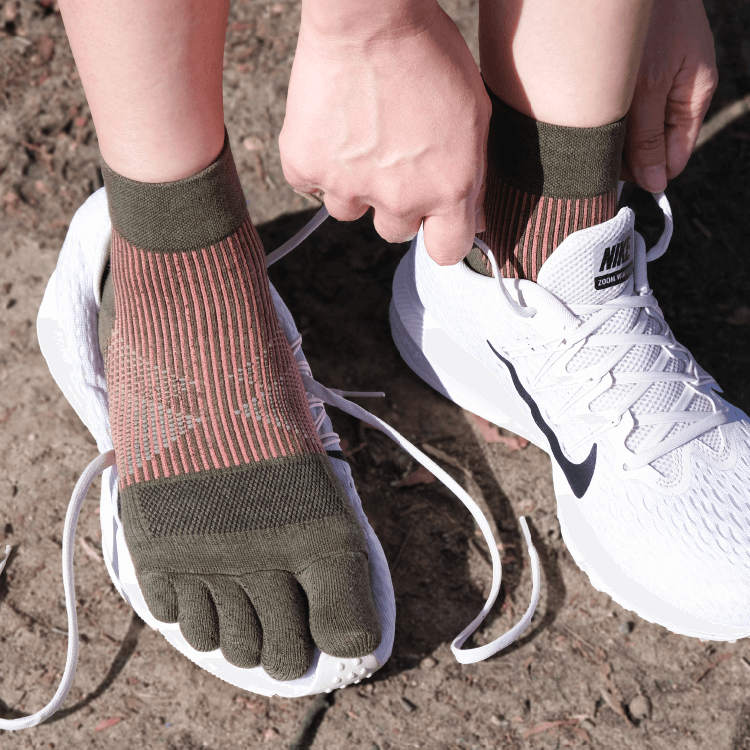
Toe socks have four genuine disadvantages: they take longer to put on, require a short break-in period, cost more than regular socks, and can be uncomfortable for people with significant bunions or unusual toe shapes. If you exercise casually, regular socks may serve you fine. But for runners and endurance athletes, these drawbacks are usually worth navigating.
Disadvantage 1: Slower to Put On
Each toe needs to go into its individual pocket, which takes 10–30 seconds longer than pulling on a regular sock. For daily commuting use, this is a genuine inconvenience. For pre-run preparation, most runners report that this becomes automatic after a few sessions — but the initial adjustment is real.
Workaround: On your first few wears, take time to ensure each toe is fully seated in its pocket. The process gets significantly faster with practice.
Disadvantage 2: Break-In Period
Some people feel mild discomfort or unusual sensations between the toes during the first few wears. This happens because toes accustomed to being compressed in a regular toe box suddenly have individual space — and that takes a little adjustment.
This is a normal adaptation response, not a quality issue. It typically resolves within 2–4 wears.
Workaround: Start by wearing toe socks for short walks or low-intensity sessions, then gradually extend use as your feet adjust.
Disadvantage 3: Higher Price Point
The knitting process for toe socks is mechanically more complex than regular socks — individual toe tubes require specialized equipment and more precise construction. This translates to a higher retail price.
How to evaluate it: If you run more than 3 times a week and regularly deal with blisters or black toenails, the cost savings on blister pads and toe protectors — combined with the comfort improvement — typically outweigh the price difference over time.
Disadvantage 4: Not Ideal for Bunions or Significant Toe Deformities
People with pronounced hallux valgus (bunions, where the big toe angles toward the other toes) may find that the toe tube placement doesn't align with their actual toe position, causing additional pressure. Those with unusually wide toes or very narrow toe spacing may also find the tube design restrictive.
Recommendation: If you have bunion concerns, try one pair first to assess comfort before committing to a full rotation.
Who Gets the Most From Toe Socks
Toe socks deliver their clearest benefits when:
- You run 3+ times per week
- You've had blisters at the toe joints or between toes
- You do triathlon, trail running, or other long-duration shoe sports
- You want to improve toe mobility and proprioceptive feedback
Who Might Not Need to Switch
- Primarily casual or low-intensity activity
- Significant bunions causing discomfort during wear
- No current blister issues, and the budget is a priority
The disadvantages of toe socks are real, but most are adaptation costs rather than fundamental problems. The time to put them on decreases with practice. The break-in period passes after a few wears. The price difference can be offset by reduced blister care costs. Fit concerns can be tested before committing.
For serious runners, the problems toe socks solve — inter-toe blisters, black toenails, ground feel — tend to outweigh the inconveniences they introduce.
You may be interested in:
5 Benefits of Toe Socks for Runners: Less Blisters, Better Feel
Running Socks for Flat Feet: 3 Features That Actually Matter


